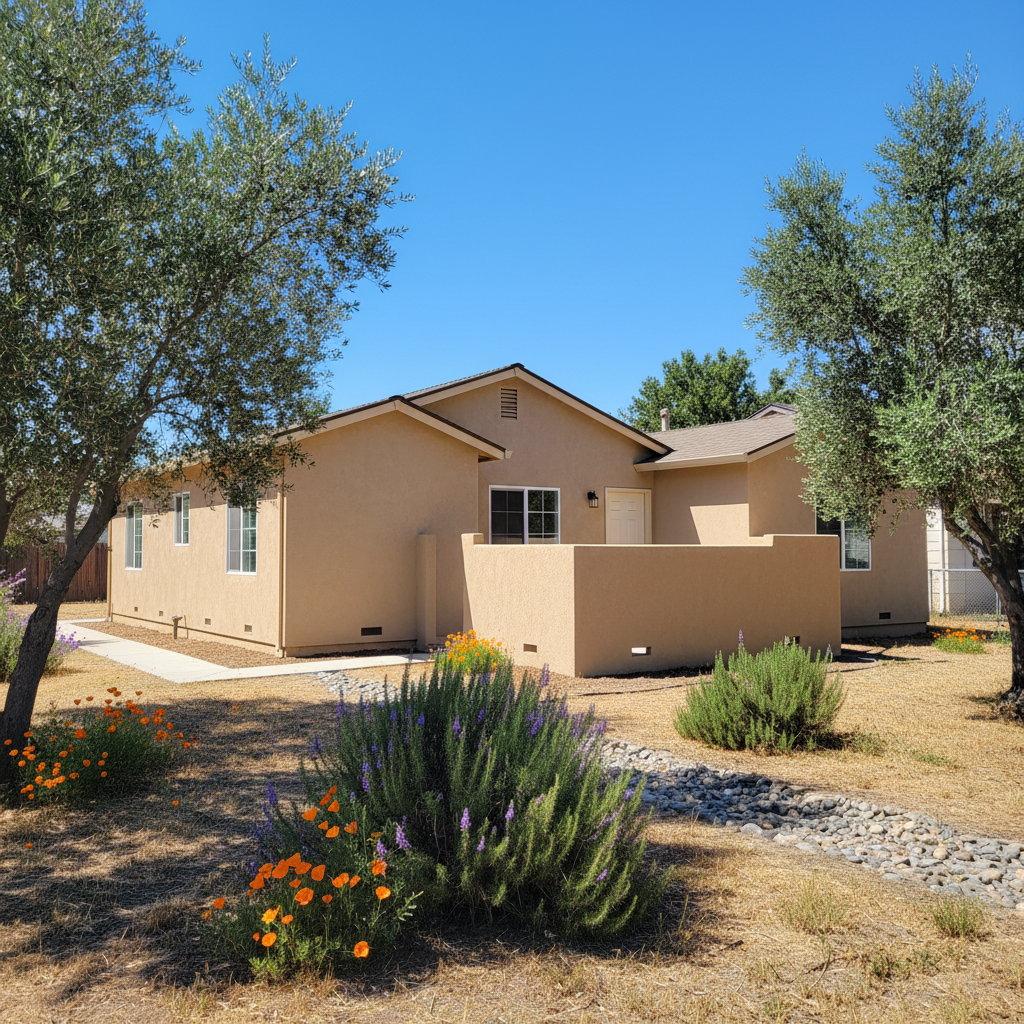
What's the Deal with Commercial Stucco Pricing?
Let's talk about commercial stucco. If you're a business owner here in Lodi, whether you're building something new or just giving an old place a facelift, you're probably wondering what kind of hit your wallet's going to take. I totally get it. Nobody wants surprises, especially with big projects like these. The truth is, commercial stucco doesn't have a single, fixed price tag, but I can definitely give you some solid numbers and tell you what really makes the cost go up or down.
You're not just paying for materials and labor, you know. You're paying for durability, for curb appeal, and for a finish that can really stand up to our Lodi summers and those occasional wet winters. A good stucco job protects your investment, plain and simple.
Why Is Commercial Stucco More Expensive Than Residential?
You might think, "stucco is stucco," right? But commercial jobs often have different requirements than residential ones. For starters, commercial buildings usually have much larger, taller walls, which means more scaffolding, more safety gear, and more time just for setting up and taking everything down. There are also stricter building codes and fire ratings to meet, which can sometimes mean using specific materials or application methods. Plus, commercial projects often come with tighter deadlines because, let's face it, time is money when you're running a business. All these little things really add up.
Factors That Really Drive the Price
When I'm putting together a quote for a commercial job, I'm looking at a few key things:
- Square Footage: This is the biggest one, obviously. More wall means more material and more labor.
- Type of Stucco System: Are we talking about traditional three-coat stucco, or something like an EIFS (Exterior Insulation and Finish System)? EIFS offers better insulation but usually costs more upfront. Synthetic stucco systems also have their own different price points.
- Condition of the Existing Surface: If we're going over old, failing stucco or a really uneven surface, there's prep work involved that adds to the cost. Sometimes we've got to chip away loose stuff or install new lath before we can even start.
- Architectural Complexity: Lots of intricate details, arches, columns, or multiple pop-outs? That's way more labor-intensive than a flat, simple wall. Every corner, every window opening, every decorative band adds time.
- Accessibility: How easy is it for our crew and materials to get to the work area? Is it a tight spot downtown on School Street, or a wide-open lot out on the edge of town? Tall buildings, for example, need more specialized equipment.
- Finish Texture: A smooth finish, like a Santa Barbara or a fine sand, takes more skill and time to get just right than a heavy skip trowel or dash finish.
- Color & Coatings: Standard colors are usually included, but custom tints or specialized elastomeric coatings (which offer extra protection and flexibility) can add to the material cost.
Typical Cost Ranges for Commercial Stucco in Lodi
Okay, let's get to some numbers. Keep in mind these are averages, and your specific project might be higher or lower depending on those factors I just mentioned. But this should give you a good ballpark.
For a standard three-coat stucco system on a commercial building in Lodi, you're generally looking at anywhere from $9 to $18 per square foot of applied surface. This includes materials, labor, and basic scaffolding.
- Basic, straightforward job (e.g., simple warehouse, flat walls, standard finish): You might be closer to the $9-$12/sq ft range.
- More complex commercial building (e.g., retail facade with details, multiple windows, some height, finer finish): Expect to be in the $13-$18/sq ft range.
- EIFS (Exterior Insulation and Finish Systems): These are usually more expensive, often running from $15 to $25+ per square foot, but they offer superior insulation properties, which can save you money on energy bills in the long run.
Remember, these numbers are just for the stucco application itself. If you need extensive demolition, structural repairs, or specialized architectural elements, those would be additional costs.
What Should a Good Quote Include?
When you get a quote from Lodi Stucco Solutions, or any other reputable contractor, make sure it's detailed. It should clearly spell out:
- Total Square Footage: How much area are they actually covering?
- Type of Stucco System: Is it 3-coat, EIFS, synthetic, etc.?
- Prep Work: What's being done to the existing surface? Is lath being installed or repaired?
- Materials: What specific brands or types of cement, sand, lime, and finish coats are they using?
- Texture and Color: Clearly defined.
- Labor Costs: Often bundled, but good to know it's covered.
- Scaffolding/Equipment Rental: Is this included or extra?
- Cleanup and Debris Removal: Who's responsible for hauling away the mess?
- Warranty Information: What kind of guarantee do they offer on their work?
- Payment Schedule: How and when payments are expected.
Don't just look at the bottom line. Compare what's actually included in each bid you get.
How to Avoid Overpaying for Commercial Stucco
You work hard for your money, and you don't want to just throw it away. Here's my advice:
- Get Multiple Bids: Don't just go with the first guy. Get at least three detailed quotes. This helps you understand the market rate and compare apples to apples.
- Check References and Licenses: Always, always, always. Ask for commercial references and call them. Make sure the contractor is licensed and insured in California. You can look up licenses on the CSLB website.
- Don't Automatically Go for the Lowest Bid: The cheapest bid often means corners are being cut, either in materials, labor quality, or what's actually included. A really low bid should make you suspicious, not excited.
- Ask Questions: If something in the quote isn't clear, ask. A good contractor will take the time to explain everything to you.
- Understand the Scope: Make sure you and the contractor are on the same page about exactly what's being done. No surprises later.
Investing in commercial stucco is a big deal for your business. Done right, it'll look great and last for decades, protecting your building and enhancing its value. Take your time, do your homework, and you'll get a fair price for quality work.